Bhaja Bhakata Vatsala
Official name: Sri Surabhi Kunjer Bhoga Arotik (Arati Kirtan Song 4)
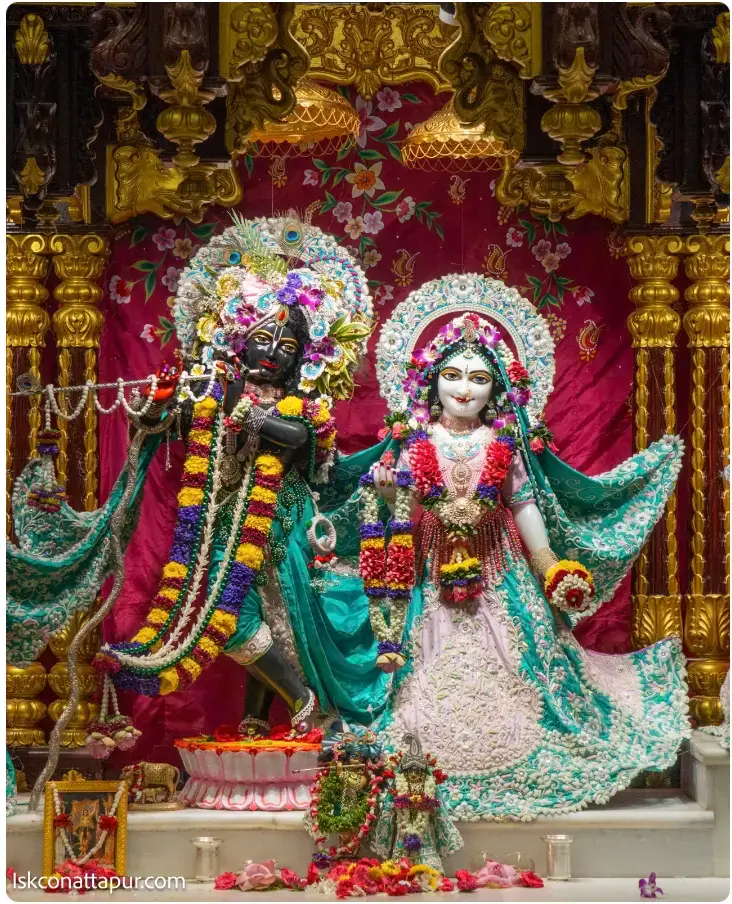
The traditional Bhoga Arati song composed by Srila Bhaktivinoda Thakura from Gitavali, sung in ISKCON temples while offering food to Sri Sri Radha-Krsna.
Introduction
Bhaja Bhakata Vatsala, also known as Sri Surabhi Kunjer Bhoga Arotik, is the fourth Arati Kirtan song from Gitavali by Srila Bhaktivinoda Thakura. It vividly describes Krsna's lunch in Vraja - the many delicacies offered by mother Yasoda and Srimati Radharani, the playful pastimes of His cowherd friends, and the joy of the gopis honoring His remnants. It is traditionally sung during bhoga offering in ISKCON temples worldwide.
Sanskrit Verses
Verse 1
bhaja bhakata-vatsala śrī-gaurahari śrī-gaurahari sohi goṣṭha-bihārī nanda-jaśomatī-citta-hari (bhaja govinda govinda gopāla)
Verse 2
belā ho'lo dāmodara āisa ekhano bhoga-mandire bosi' koraho bhojana
Verse 3
nandera nideśe baise giri-bara-dhārī baladeva-saha sakhā baise sāri sāri
Verse 4
śuktā-śākādi bhāji nālitā kuṣmāṇḍa dāli dālnā dugdha-tumbī dadhi mocā-khaṇḍa
Verse 5
mudga-borā māṣa-borā roṭikā ghṛtānna śaṣkulī piṣṭaka khīr puli pāyasānna
Verse 6
karpūra amṛta-keli rambhā khīra-sāra amṛta rasālā, amla dwādaśa prakāra
Verse 7
luci cini sarpurī lāḍḍu rasābalī bhojana korena kṛṣṇa ho'ye kutūhalī
Verse 8
rādhikāra pakka anna vividha byañjana parama ānande kṛṣṇa korena bhojana
Verse 9
chale-bale lāḍḍu khāy śrī-madhumaṅgala bagala bājāy āra deya hari-bolo
Verse 10
rādhikādi gaṇe heri' nayanera koṇe tṛpta ho'ye khāy kṛṣṇa jaśodā-bhavane
Verse 11
bhojanānte piye kṛṣṇa subāsita bāri sabe mukha prakhāloy ho'ye sāri sāri
Verse 12
hasta-mukha prakhāliyā jata sakhā-gaṇe ānande biśrāma kore baladeva-sane
Verse 13
jambula rasāla āne tāmbūla-masālā tāhā kheye kṛṣṇa-candra sukhe nidrā gelā
Verse 14
biśālākha śikhi-puccha-cāmara ḍhulāya apūrba śayyāya kṛṣṇa sukhe nidrā jāya.
Verse 15
jaśomatī-ājñā pe'ye dhaniṣṭhā-ānīto śrī-kṛṣṇa-prasāda rādhā bhuñje ho'ye prīto
Verse 16
lalitādi sakhī-gaṇa avaśeṣa pāya mane mane sukhe rādhā-kṛṣṇa-guṇa gāya
Verse 17
hari-līlā ek-mātra jāhāra pramoda bhogārati gāy ṭhākur bhakativinoda
Translation
1) Just worship Sri Gaurahari, who is always affectionate toward His devotees. He is the same Supreme Godhead, Krsna, who sported in the cowherd pastures of Vraja and stole the hearts of Nanda and Yasoda. Just worship Govinda, Govinda, Gopala!
2) Mother Yasoda calls to Krsna, "My dear Damodara, it is very late. Please come right now, sit down in the dining hall, and take Your lunch."
3) On the direction of Nanda Maharaja, Krsna, the holder of Govardhana Hill, sits down, and then all the cowherd boys, along with Krsna's elder brother, Sri Baladeva, sit down in rows to take their lunch.
4) They are then served a feast of sukta and various kinds of green leafy vegetables, then nice fried things, and a salad made of the green leaves of the jute plant. They are also served pumpkin, baskets of fruit, small square cakes made of lentils and cooked down milk, then thick yogurt, squash cooked in milk, and vegetable preparations made from the flower of the banana tree.
5) Then they receive fried squares of mung dahl patties, and urad dahl patties, capatis, and rice with ghee. Next, sweets made with milk, sugar and sesamum, rice flour cakes; thick cooked-down milk; cakes floating in milk; and sweet rice.
6) There is also sweet rice that tastes just like nectar due to its being mixed with camphor. There are bananas, and cheese which is nectarean and delicious. They are also served twelve kinds of sour preparations made with tamarinds, limes, lemons, oranges, and pomegranates.
7) There are puris made with white flour and sugar; puris filled with cream; laddus; and dahl patties boiled in sugared rice. Krsna eagerly eats all of the food.
8) In great ecstasy and joy Krsna eats the rice, curried vegetables, sweets, and pastries cooked by Srimati Radharani.
9) Krsna's funny brahmana friend Madhumangala, who is very fond of laddus, gets them by hook or by crook. Eating the laddus he shouts, "Haribol! Haribol!" and makes a funny sound by slapping his sides under his armpits with his hands.
10) Beholding Radharani and Her gopi friends out of the corners of His eyes, Krsna eats at the house of mother Yasoda with great satisfaction.
11) After lunch, Krsna drinks rose-scented water. Then all of the boys, standing in lines, wash their mouths.
12) After all the cowherd boys wash their hands and mouths, in great bliss they take rest with Lord Balarama.
13) The two cowherd boys Jambula and Rasala then bring Krsna pan made with betel nuts, fancy spices, and catechu. After eating that pan, Sri Krsnacandra then happily goes to sleep.
14) While Krsna happily takes His rest on an excellent bedstead, His servant Visalaksa cools Him with a fan of peacock feathers.
15) At mother Yasoda's request the gopi Dhanistha brings remnants of food left on Krsna's plate to Srimati Radharani, who eats them with great delight.
16) Lalita-devi and the other gopis then receive the remnants, and within their hearts they sing the glories of Radharani and Krsna with great joy.
17) Thakura Bhaktivinoda, whose one and only joy is the pastimes of Lord Hari, sings this Bhoga-arati song.
The Significance of Bhoga Arati
Bhoga Arati is the offering of food (bhoga) to the Lord at midday. By singing this song, devotees meditate on Krsna's intimate Vraja pastimes - eating with His friends in Nanda Maharaja's home and relishing the loving preparations of Srimati Radharani.
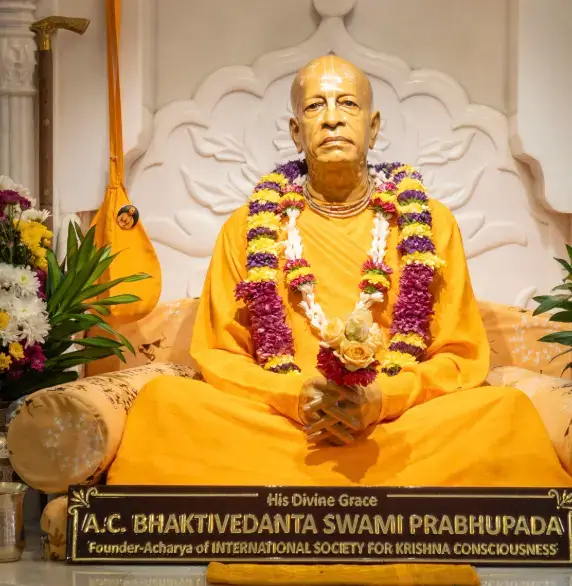
We offer our humble gratitude to our beloved Founder-Acarya His Divine Grace A.C. Bhaktivedanta Swami Srila Prabhupada, who tirelessly translated and distributed these devotional songs of the previous acaryas so that sincere souls all over the world may sing the glories of Sri Krsna.
Meditations While Singing
- •Vraja-lila smaranam: Remember Krsna's sweet pastimes in Vrindavan with His cowherd friends
- •Loving service mood: Feel the affection of mother Yasoda and Srimati Radharani in preparing the offering
- •Gaura-Krsna abheda: Recognize Sri Gaurahari as Krsna Himself, affectionate to His devotees
- •Sanctifying daily food: Connect every meal to Krsna's mercy by remembering this offering
About Srila Bhaktivinoda Thakura
Srila Bhaktivinoda Thakura (1838-1914) was a pioneering Gaudiya Vaishnava spiritual leader who revived and spread the teachings of Sri Chaitanya Mahaprabhu during the 19th century. He authored over 100 books on Vaishnava philosophy and composed numerous devotional songs - including the Gitavali collection from which this Bhoga Arati is drawn - that are still sung in temples today.
Historical Note: The Radha Krsna Temple Album (1971)
This Bhoga Arotik reached a worldwide audience through the 1971 album The Radha Krsna Temple, produced by George Harrison and released on Apple Records, featuring Srila Prabhupada's London disciples. For millions outside India, this album was their first introduction to the ISKCON Bhoga Arati and the sweet kirtans of Srila Bhaktivinoda Thakura — a testament to Srila Prabhupada's vision of distributing Krishna Consciousness across the globe.
Spiritual Significance
Scriptural Source & Tradition
Commentary from the Acharyas
When to Sing / Chant
Benefits for the Devotee
Gratitude to His Divine Grace A.C. Bhaktivedanta Swami Srila Prabhupada
We offer our humble obeisances at the lotus feet of our founder-acharya, His Divine Grace A.C. Bhaktivedanta Swami Srila Prabhupada, without whose causeless mercy the priceless prayers, bhajans and sacred literature of the Gaudiya Vaishnava tradition would have remained inaccessible to most of the world. By his herculean preaching efforts, his unparalleled translations and his founding of the International Society for Krishna Consciousness (ISKCON), the holy names, pastimes and instructions of Sri Sri Radha-Krishna and Sri Chaitanya Mahaprabhu are today chanted in every town and village.
nama om vishnu-padaya krishna-preshthaya bhu-tale
srimate bhaktivedanta-svamin iti namine
namas te sarasvate deve gaura-vani-pracharine
nirvishesha-shunyavadi-pashchatya-desha-tarine
All glories to Srila Prabhupada. All glories to the Vaishnava acharyas in the disciplic succession.